
How Poor Health and Education Are Holding Back Earning Potential in Developing Nations
Have you ever wondered how a child’s early life, even before they step into a classroom, can shape the income they’ll earn decades later? It turns out, access to healthcare and education can truly determine the future of entire countries.
In many developing nations, young people are struggling to reach their full potential. Why? Because poor health systems and weak education programs are leaving them unprepared for the modern workforce. According to a recent report by the World Bank, this crisis is costing countries billions and making prosperity feel out of reach for millions.
Why Health and Education Matter for Earning Potential
Think about someone trying to build a house. If they don’t have good tools or a solid foundation, what happens? The house might stand for a while, but it won’t last. The same idea applies to children in developing countries.
Health and education are the tools and foundation young people need to build successful lives. When a child is often sick or doesn’t get enough nutritious food, it’s harder for them to grow up healthy and strong. If they miss school or the school quality is poor, they struggle to learn vital life skills. Later on, that translates to lower wages and fewer job opportunities.
The Numbers Tell a Troubling Story
The World Bank’s Human Capital Index measures just how well countries are developing the skills and health of their people. In countries like the U.S. or the U.K., individuals tend to reach about 70 to 80% of their full potential. But in places like Sub-Saharan Africa or South Asia, it’s often below 40%.
Let’s break this down further:
- Poor health: Many children suffer from illnesses like malaria or malnutrition that affect brain development and learning.
- Weak education: Even when kids go to school, they often don’t learn basic math or reading skills due to low-quality teaching or inadequate resources.
These issues are not just personal; they’re economic. The report estimates that developing countries are losing up to 70% of their potential wealth because their workers aren’t as productive as they could be.
How Does This Impact Everyday People?
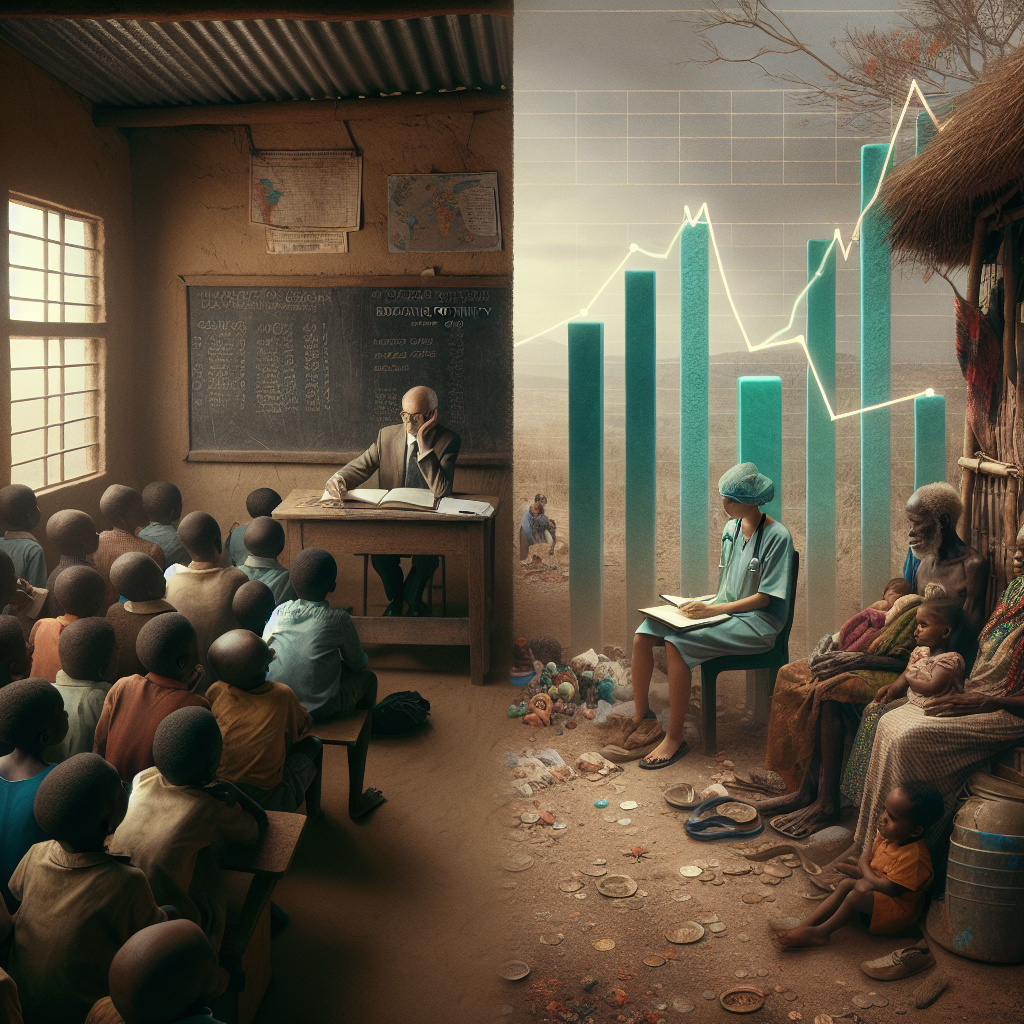
Imagine this: A 10-year-old girl in Nigeria walks two miles every day to a crowded school where there are no books, no electricity, and just one teacher for 60 kids. When she gets sick, which happens often, there are no nearby clinics or medicines to help her recover quickly. Fast forward ten years, and she’s entering the job market without the skills or health to compete globally. Her job options are few, and the pay is low.
This isn’t just her story, it’s the reality for millions.
The Vicious Cycle of Poverty
Poor health and education aren’t just consequences of poverty, they actually help to keep poverty alive. When a generation misses out on proper care and schooling, they pass on the same challenges to the next. It becomes a cycle that’s difficult to break.
And here’s the kicker: Investing in health and education isn’t that expensive. The World Bank believes that even small investments can lead to huge improvements in productivity and income. The return can be as much as four or five times the initial cost over a person’s lifetime.
What’s Being Done?
The good news is that some countries are beginning to take action. Nations like Vietnam and Ethiopia have made significant strides by:
- Improving early childhood health programs, including vaccinations and nutrition support.
- Training better teachers and ensuring schools have basic supplies and infrastructure.
- Using data to track student progress and adjust teaching methods.
These efforts have helped lift education scores and worker productivity — clear evidence that change is possible.
What Can the Rest of the World Do?
If you’re reading this from a developed nation, you might ask, “Why should I care?” That’s a fair question. But in an interconnected world, helping others rise doesn’t push us down, it lifts us all up.
Here’s how:
- Stronger economies in developing nations mean more trade opportunities.
- Healthy, educated populations are less vulnerable to conflict or migration crises.
- It’s simply the right thing to do — human potential should never depend on where someone is born.
Looking Ahead: A Smarter Investment
Improving human capital is like planting seeds that will grow for generations. Governments, nonprofits, and even individuals can play a role by supporting initiatives that focus on:
- Access to prenatal and infant healthcare
- Free primary and secondary education with trained teachers
- School meal programs to fight malnutrition
The price of ignoring this issue? Billions lost in productivity, and a future where inequality continues to grow.
Final Thoughts
So, where do we go from here? We need to start seeing investments in people, especially children, not as charity, but as smart economics. Healthy, educated individuals create stronger countries. And stronger countries build a better world for all of us.
If we’re serious about ending global poverty and increasing economic opportunity, then the solution isn’t complicated. It’s about giving every child the tools they need to succeed, no matter where they live.
Join the Conversation
What do you think we should prioritize: education, healthcare, or both? Have you seen local success stories in your own city or country that show the power of investing in people? Share your thoughts below, let’s keep the conversation going.
Because when we lift others up, we all rise.