

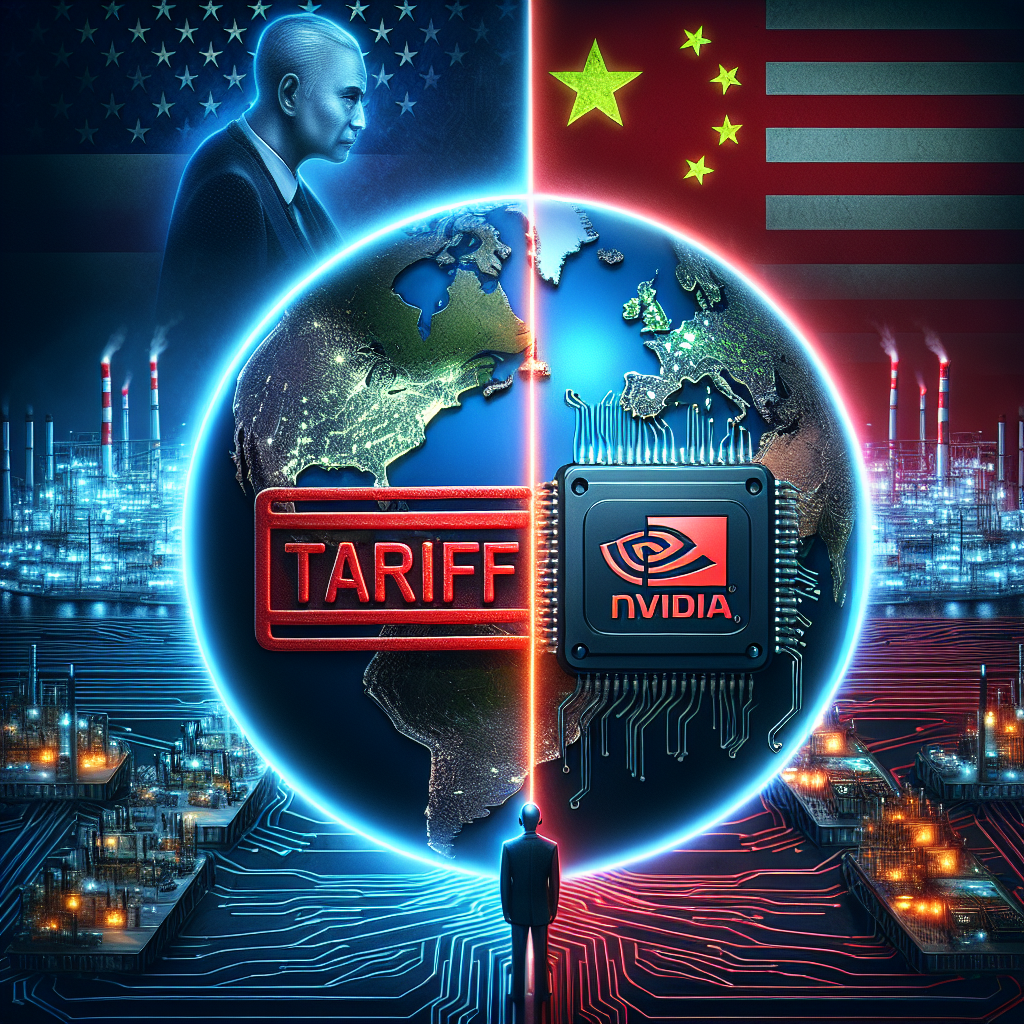
Trump Slaps Tariffs on Nvidia’s AI Chips: What It Means for Tech and Consumers
In an unexpected move bound to shake up the tech industry, former President Donald Trump has imposed new tariffs on Nvidia’s AI chips. These specialized chips power everything from self-driving cars to smart assistants like Alexa – and they’re a huge deal in the world of artificial intelligence (AI).
If you’re wondering what this all means and how it may impact your technology experience (or even your wallet), you’ve come to the right place. In this post, we’ll break it down in plain English and explain why this decision matters far beyond the boardrooms of Silicon Valley.
What’s Going On With Nvidia and Trump’s Tariffs?
Let’s start with the basics.
Nvidia is a leading chipmaker known for its high-performance AI processors. These chips play a crucial role in powering advanced technologies. Whether you’re using a smart device, gaming on a high-end PC, or interacting with AI tools like ChatGPT, there’s a good chance Nvidia is behind it.
Donald Trump on Wednesday imposed a 25% tariff on certain AI chips, such as the Nvidia H200 AI processor and a similar semiconductor from AMD called the MI325X, under a new national security order released by the White House. The move is part of a broader strategy aimed at protecting U.S. national security and reducing China’s access to cutting-edge technology.
Tariffs are basically extra taxes placed on imported or exported goods. When they’re applied, the cost of doing business usually goes up – and someone, often the consumer, ends up footing the bill.
Why Target Nvidia’s AI Chips?
“The United States currently fully manufactures only approximately 10 percent of the chips it requires, making it heavily reliant on foreign supply chains,” the proclamation said, adding that the reliance was a “significant economic and national security risk”.
Trump last year announced he would allow Nvidia to sell H200 chips to China in exchange for a cut of the sales of those chips. Legal experts questioned whether such an arrangement would violate the US constitution’s ban on taxing exports.
The Trump administration this week required that China-bound chips make a detour from Taiwan, where they are made, through the United States for testing by a third-party lab. When the chips enter the United States, they are subject to the 25% tariff announced on Wednesday.
Trump in December said he would slap tariffs on Chinese semiconductor imports over Beijing’s “unreasonable” pursuit of chip industry dominance, but delayed the action until June 2027.
AI chips are at the heart of today’s tech revolution. From predictive algorithms to facial recognition and language processing, these chips are powering the world’s most advanced systems. In recent years, the U.S. has grown increasingly concerned that China is using American-made technology to boost its own AI capabilities, especially for military and surveillance purposes. By targeting Nvidia’s AI chips, the Trump camp is aiming to put the brakes on that progress.
How Will These Tariffs Impact Tech Companies?
Shares of Nvidia, AMD and Qualcomm traded slightly lower in after-hours trading.
Major players like Apple, Amazon, and Google all of whom rely heavily on AI could feel the heat.
Although the tariffs are aimed at exported chips, the ripple effect across the tech supply chain could lead to rising costs and production delays. Companies might need to find alternative parts or even scale back some projects.
And it’s not just big companies who’ll be affected…
Small Startups May Struggle the Most
Startups working in AI especially those depending on affordable, high-performance chips could face higher costs. That might slow innovation and make it harder for new players to compete with tech giants.
As a small business owner working with AI software, I’ve already noticed partners worrying about delivery times and cost spikes. It’s like trying to build a house while the price of bricks keeps changing daily.
Will Consumers Feel the Impact?
In short: yes.
While these tariffs don’t directly target consumer goods, tech trickles down. If the companies producing your favorite gadgets or apps are paying more for parts, chances are those costs will eventually show up in the form of:
- More expensive smartphones and electronics
- Slower rollout of new AI features or devices
- Subscription fee hikes for certain platforms
It’s a bit like adding tolls to every bridge between your warehouse and your store. Sooner or later, your customers feel the squeeze.
How Are Industry Leaders Reacting?
Nvidia has remained relatively quiet, but analysts say the company is now re-evaluating key parts of its international strategy.
Several tech executives have expressed concern that these tariffs might stifle innovation or worsen tensions with trade partners. Others, however, support the move, arguing it’s time to turn the tide and bring more chip production back to the United States.
Interestingly, some insiders believe the move may nudge companies to invest more heavily in domestic chip manufacturing which could be good for American jobs in the long run.
Could We See a Tech Cold War?
Some experts are throwing around the term “Tech Cold War” a modern stand-off where the battleground isn’t weapons but code, chips, and data.
If this sounds dramatic, consider this: both the U.S. and China are racing to dominate AI, quantum computing, and cyber infrastructure. These tariffs, though just one piece of the puzzle, signal a strategy shift where economic tools become strategic weapons.
Think of it like a game of digital chess, where every move could reshape how we build, buy, and use technology for years to come.
What Happens Next?
There’s a lot still up in the air. The Biden administration might respond or counter by easing certain restrictions or doubling down. Other countries could get caught in the middle, especially those who depend on U.S. made chips.
For now, investors are watching closely, startups are adjusting their plans, and the average person might just see their next phone or laptop come with a slightly higher price tag.
Final Thoughts: Why You Should Pay Attention
Even if you’re not a techie, understanding how these tariffs affect global trade and everyday life is important.
Technology doesn’t just live in our pockets. It shapes our jobs, our safety, and our connection to the world. When big changes happen in that space, it’s worth paying attention.
So, keep an eye on the headlines. As these policies unfold, they could shape the future of AI and the role America plays in it for generations to come.
What do you think? Should the U.S. be placing tighter controls on high-tech exports, or do these kinds of tariffs do more harm than good? Let’s talk in the comments below!